Posts

A Trillion Dollar Market - But Where Are the People?

  Last week we talked about how the market in clean technology and data science   is already in the multi-billion dollar range and is headed to the multi-trillion dollar space in the next decade or so. However, one of the challenges that analysts highlighted was the lack of professionals who have sufficient expertise in both clean technology and data science. So today, let’s take a look at what’s happening in educating professionals in this exciting, new field as well as the kind of skills that are needed.   Most of the traditional college and university programs haven’t yet caught up with the demand for professionals at this intersection of specialities - although they are getting there! While many universities and colleges have created data science degrees - these usually focus on the problems that are faced by the high-tech and internet sectors. The graduates from these programs usually have a pretty solid understanding of coding, algorithms including machine learning,...
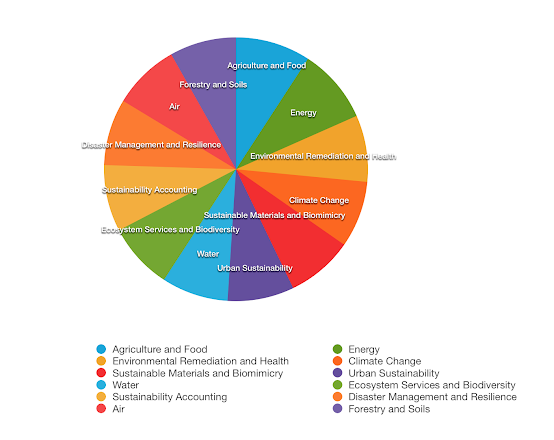
Data Science and Clean Technology: Updated Market Analysis

Image
  If you were to ask people why they’re interested in applying data science in clean technology - the chances are that you’ll come across three answers. 1) They want to make a difference to the planet and help people 2) They think it’s cool technology and want to be at the forefront of innovation and 3) They’ve heard it’s a hot and upcoming field with lots of jobs and opportunities and want to get in at the ground level.   Now, one and two are both pretty obvious - but what about the third reason? Is the intersection of clean technology and data science really such a growing field?     To answer that question, let’s take a look at some numbers. Now, about five years ago, when the field was in its infancy, there was a lot of speculation about the field being anywhere from a   multi-billion dollar market to a multi-trillion dollar market . How did those estimates hold up, now as we look at what the next five years may bring?   As it turns out, the estimates h...

Not just another machine learning algorithm - how solving clean technology applications forces adaptations in basic machine learning techniques.

  One of the first questions I get about workshops on this topic is - why do we need to talk about machine learning again? There are tons of online courses available already, lots of free material on the web and libraries in Python that are easy enough to get started with. So, why look at this stuff once more? Why not just point us to the best existing resources and let us get on with it?   And the answer is - yes, there are lots of excellent resources (free and paid) on machine learning and yes, we’ll have a list of those resources available for additional reference. But, and this is a big but - many of these resources are targeted to problems faced in the high-tech sector, where the data and types of problems are very different. When we’re solving problems in clean technology, the kind of data we have and the questions we’re faced with are often quite different. That means that machine learning algorithms have to be adapted to work in our sector - and the way they get adapte...

Go wide or go deep? Data and models in clean technology

  When faced with a question about agriculture, water, energy, air or another clean technology system, how do you decide to model it? Do you dive down deep into the subject matter and try and figure out what would work? Or do you go wide, look at the interactions between different systems and see how different types of data and models can be combined? Or do you do a mix of both?     Like many other challenges in the data science and clean technology fields, it really depends on the question you’re trying to answer - and the data that are available. If the question you’re trying to answer has a relatively well defined process and sufficient data - then it makes sense to start by diving deep into the subject and looking at different processes and interactions within a relatively narrow field. For example, let’s say that we’re trying to understand the chemical interactions in a water treatment plant process and if there’s a problem with how effectively the treatment process ...

Startups and the Market for Geospatial Data and Remote Sensing

  The geospatial and remote sensing sector has exploded in the last five years and is poised for even more growth over the next decade. In the initial years, companies in this sector were pretty niche - with customers that were primarily in government and the military. And then, as computing power became cheaper, satellite and drone costs decreased to a fraction of what they used to cost and other uses of remote sensing and spatial data were discovered, the sector exploded with new startups entering the field and larger companies expanding their offerings.   In fact, the market in geospatial data and remote sensing is expected to double from $53 billion in 2019 to $110 -$134 billion by 2025 at an annualized growth rate of ~15%.     It’s a global market, with the United States being the largest player so far with 40% of the market, closely followed by the European Union. The rest of the world is also growing rapidly, with India, China and Argentina being the leading m...

Reopening National Parks During the Pandemic - When Remote Sensing Can Help

Image
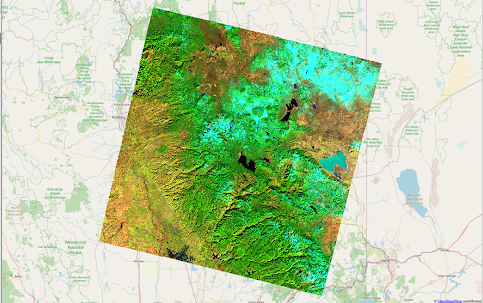
  It was great to meet so many folks at our live workshop session on Sunday - there were a lot of questions and we had fun in our hands-on problem - working through identifying the Camp Fire and estimating the damage it caused from remote sensing data.   If you missed it and are curious about remote sensing, you can still sign up for the online course and other courses   here . All the material that we cover in the live workshop, including our hands-on problem, is available in the course.   So today, let’s take a look at some of the latest research on building models from remote sensing data and see how these models can help us navigate the impacts from reopening high-value tourist destinations in the pandemic.   With all the data available from remote sensing hardware, one of biggest questions facing scientists and engineers working in the clean tech sector is - which data source is the most effective in solving the problem? In some cases, the answer jumps out ...

When Remote Sensing Satellites Were First Launched....

  Did you know that the first photographs of the Earth’s surface were taken during the early Apollo missions as practice for mapping the Moon?     These early photographs provided the stimulus for launching the Landsat satellites in the 1970s - a program that provided the first civilian uses of satellite data - and is still going strong today. In today’s world of commercial satellites ringing the Earth, it seems almost quaint to remember that one of the arguments used most often against the Landsat program was that high-altitude aircraft could do the job just as well.   In fact, the story of how the Landsat program was created and the battles to get it off the ground is fascinating!   Back in the 1960s and 1970s, scientists were familiar with data from weather satellites and the kinds of questions they could answer. But what else could be seen from space? And how useful was it?   So, when the first Landsat satellite was launched on 23rd July 1972, the bigge...

Startups, Funding and Disruption In The Wastewater Sector

  Today, we’ll conclude our series on data science in the wastewater sector with a look at the market size and some of the startups that are disrupting the sector.   The global market for wastewater treatment was $48 billion in 2019 and is expected to grow to $65 billion by 2023, an annualized growth rate of about 6%.   This includes both municipal wastewater and wastewater from industrial plants such as oil and gas, paper, chemical manufacturing, food and mining. The market consists of engineering design and construction, operations, maintenance and process control of wastewater infrastructure, including sewer pipes and treatment plants.     While wastewater treatment is necessary in all countries, the size of the market by country is typically dependent on the regulations and environmental requirements. Europe and North America have the largest municipal wastewater treatment markets, but demand is rapidly growing in China, India and other developing countries....

How Do Wastewater, Origami, Covid-19 and Remote Sensing Fit Together?

  When you hear the words “remote sensing”, what do you think about? Drones taking pictures of streets? Spy satellites?     The chances are that if you’re in the clean technology field, you’re thinking about land use and land cover, mapping crop productivity, estimating water accessibility, monitoring air pollution - all very typical cases where data from satellites, drones, UAVs and cameras are used to observe environmental conditions and make predictions.   But, what about wastewater?   Now wastewater is typically the poor cousin of the water sector - we all need it, but we’d much rather not think about it at all! But it’s really important and as we’ve seen recently, can be used for more than just waste disposal.   Right now, cities and countries around the world are monitoring wastewater to detect the spread of Covid-19.   So far, sampling methods have focused on collecting traditional grab samples at the wastewater treatment plant or at other inlet...